
By Rasheda Bell, Ph.D.,
Contributing Writer,
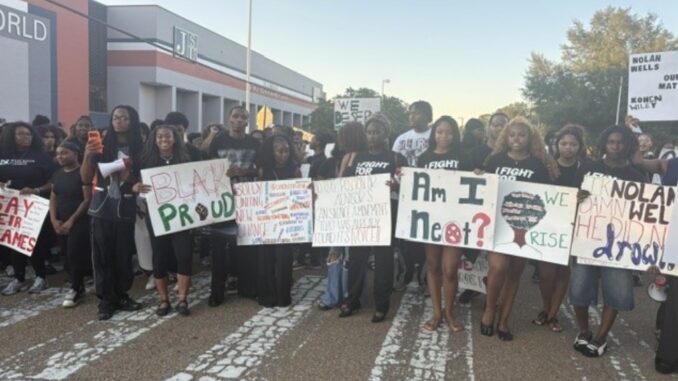
On Oct. 7, 2026, the message outside Jackson State University’s Athletic Assembly Center was unmistakable: dressed in black and united in purpose, students had come not simply to march, but to demand answers. Their Blackout Rally and on-campus march brought students and community members together in remembrance of young Black lives lost under troubling circumstances and in a collective call for justice.
For some, it was a peaceful protest; for others, it marked the beginning of a broader movement to confront unanswered questions, demand transparency, and challenge the silence surrounding these tragedies. Demartravion Reed, Nolan Wells, Tasia Fortune, Kohen Wiley, and Jaylen Lewis were among the young Black people whose deaths and the facts surrounding them have incited questions that, according to organizers, remain unresolved. Participants were encouraged to bring a sign, bring a friend, and, most importantly, bring their voices. The message was explicit: when calls for accountability go unanswered, silence is not an option.
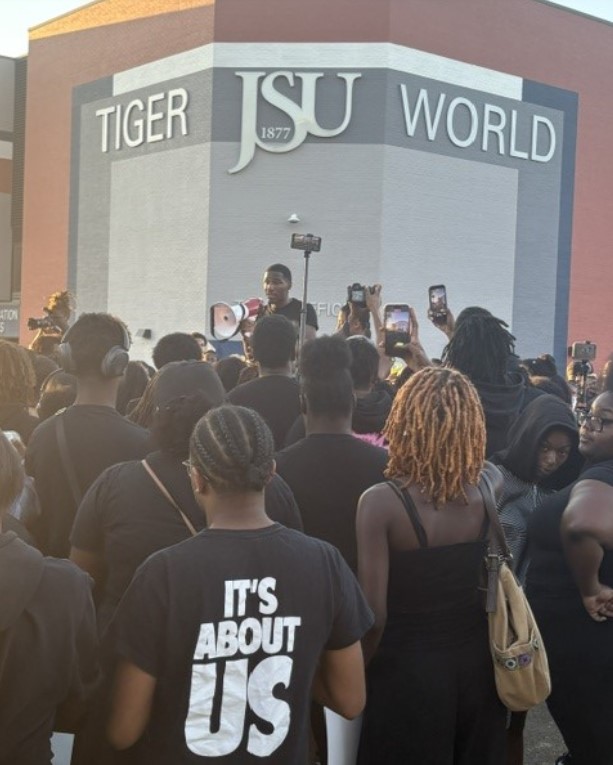
The march culminated at the COFO Civil Rights Education Center, a fitting destination given its connection to the organizing efforts that helped advance the Civil Rights Movement in Mississippi. The location reminded everyone that meaningful change often begins when ordinary people come together in response to institutions that have failed to meet their responsibilities.
For Jakari Holland, founder of the Mississippi Access Project and rally organizer, the turnout was both overwhelming and encouraging. As participants cheered and celebrated their collective efforts, Holland made one thing clear: this was only the beginning. Chants rang through the streets: “That could have been me!”
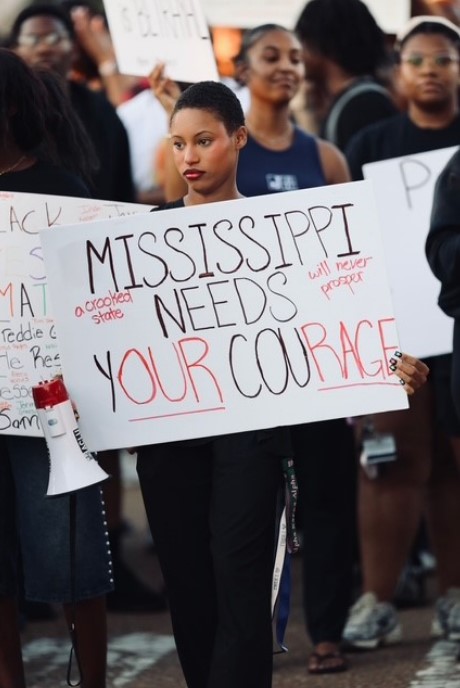
Holland added, “I think people need to understand that this march was about more than bringing students together for a day. We attend Jackson State University, a publicly funded institution with a history deeply rooted in the Civil Rights Movement. And decades later, here we are, another generation of young Black Mississippians having to ask questions about the safety of our communities and whether our lives are being treated with the seriousness they deserve. There is a constant narrative that young people are socially apathetic, but I think what happened on October 7th challenges that.
“We brought students and community members together because these losses are personal to us. They could have been our classmates, friends, or family members. We cannot continue waiting for another tragedy before recognizing our collective responsibility to one another. As part of a public institution, we have every right to make these demands. Young people are constantly being told that we are the future, but we are living with the consequences of decisions made for our future right now. We should not have to wait until we are older, hold public office, or experience another tragedy before our voices are taken seriously.”
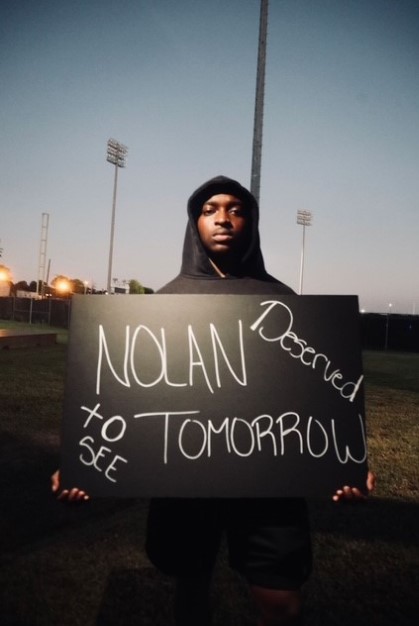
Despite reported concerns about road and pathway closures due to construction along the planned route, organizers and participants pressed on, taking less-traveled roads rather than abandoning the march. Their determination reflected the very spirit of the rally: obstacles might alter the route, but they would not erase the reason for marching. The crowd’s response was captured in a defiant declaration: “No blocked streets will stop our cause!” Another sign carried its own message: “No Title, Position, or Advisor Can Silence a Movement That Has Already Found Its Voice!”
The rally also raised questions about institutional leadership and the public’s duty. When an audience member asked how the campus community viewed Jackson State University’s president, appearing in photo opportunities with Mississippi Attorney General Lynn Fitch, Holland reiterated that the Mississippi Access Project is nonpartisan and declined to comment on the political question.
Instead, he redirected attention to the movement’s stated purpose and its next steps. “Marching was never the end goal,” Holland emphasized.
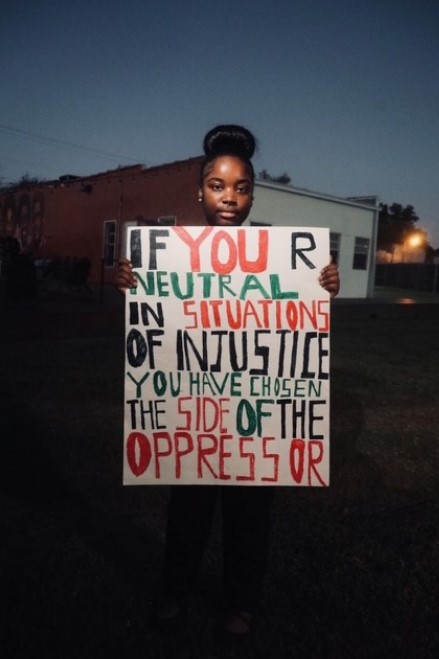
Organizers outlined two key demands: an independent investigation into the Mississippi State Medical Examiner’s Office and a public town hall with Jackson Mayor John Horhn and relevant public officials to address safety concerns affecting local communities. They are seeking more than an opportunity to speak. They want meaningful engagement in the democratic process, transparent answers to their questions, and concrete commitments from elected and appointed officials to protect and serve the public.
The significance of the October 7th rally will ultimately be measured not by the number of signs held high, the chants that echoed through the streets, or the distance participants traveled. Its significance will be measured by what happens next: whether the questions raised receive serious attention, whether people pursue the requested answerability, and whether the voices of young Black Mississippians are met with action rather than silence.
At an institution whose history is intertwined with the struggle for civil rights, the march reminded everyone that each generation inherits both the promise of progress and the responsibility to keep pursuing it. The students raised their voices. Now the question is whether those with the power to respond will listen – and whether listening will finally lead to answers.
Be the first to comment