
By Edelia J. Carthan, Ed.D.,
Contributing Writer,
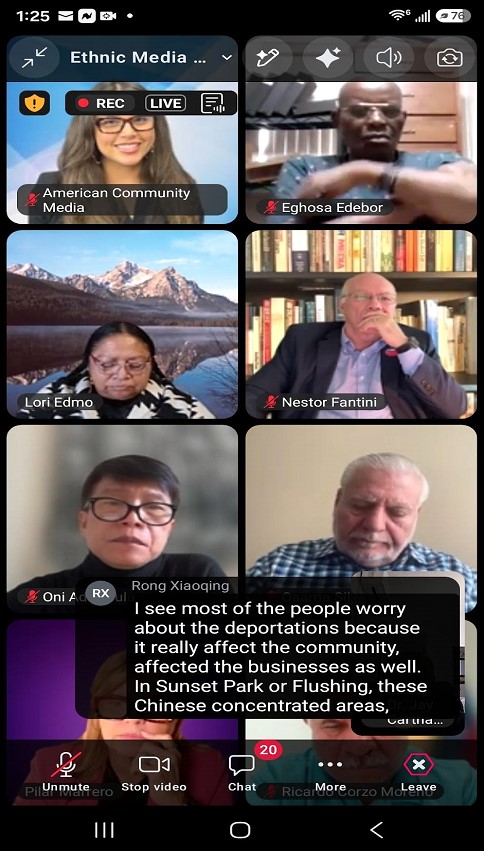
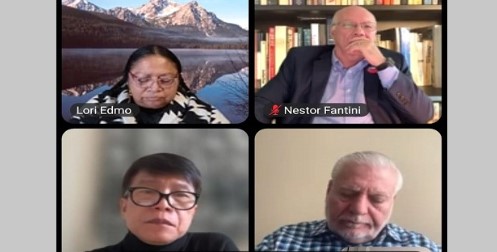
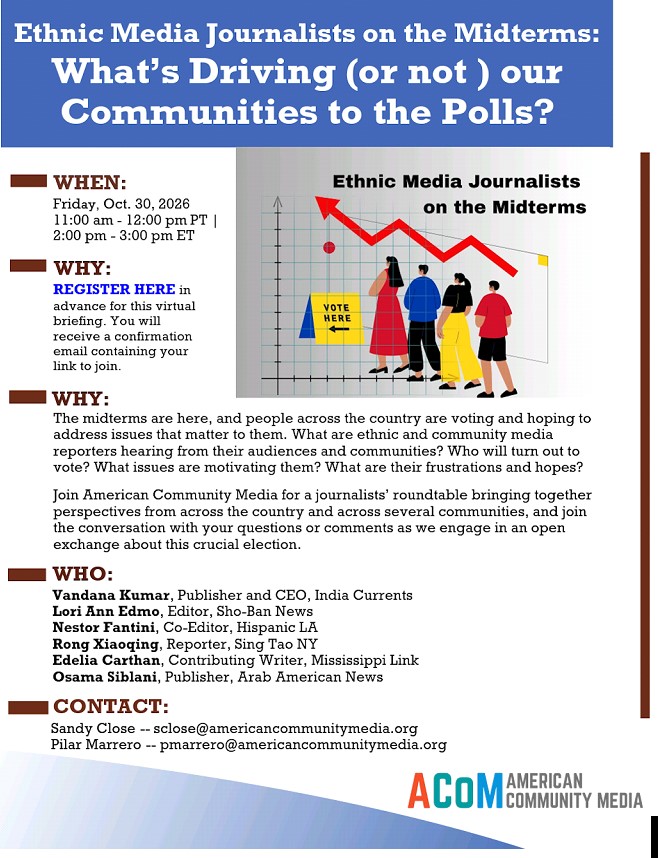
Just days before Americans headed to the polls for the November 3 midterm elections, six journalists from across the country gathered to discuss the issues weighing on voters and the growing frustration surrounding political representation, economic uncertainty and government accountability.
The October 30 virtual roundtable, hosted by American Community Media (ACoM), brought together journalists representing communities whose concerns are often overlooked in national political conversations.
Moderated by ACoM Associate Editor Pilar Marrero, the discussion examined what motivated voters, what discouraged participation and what communities hoped would change following the election.
“With Election Day basically here, we’re brought together six journalists from different communities and regions to discuss what they’re hearing, what is motivating people to vote, what might keep them home, and what their communities hope or fear will come next,” Marrero said.
Different communities, similar concerns: From Arab American communities in Michigan to Black voters in Mississippi, the discussion revealed concerns about the direction of the country.
Osama Siblani, publisher of The Arab American News in Dearborn, Michigan, represented a community whose political influence has attracted national attention.
Journalists also examined immigration enforcement, rising living expenses, political representation and the uncertainty facing families navigating changing federal policies.
For many Americans, the election was about more than political parties. The cost of groceries, housing, health care and everyday necessities remained central concerns.
The discussion included perspectives from Latino, Native American and Asian American communities, illustrating how national policies can affect populations differently while producing similar questions about fairness and accountability.
Mississippi’s long struggle for political power
Representing The Mississippi Link, Edelia Carthan brought Mississippi’s complicated political history into the national conversation.
Mississippi has the highest percentage of Black residents of any state and a substantial number of Black elected officials. Yet no African American has held statewide elected office in Mississippi since Reconstruction.
That contradiction reflects a history shaped by voter suppression, political violence and laws designed to limit Black political power.
The Mississippi Plan of 1875 used violence and intimidation to suppress Black voters. The state’s 1890 Constitution later established restrictions that disenfranchised generations of African Americans.
During Reconstruction, Mississippi elected Hiram Revels and Blanche K. Bruce to the United States Senate, making history at a time when newly emancipated Black Americans were beginning to exercise political power.
More than a century later, the struggle for equitable representation remains part of Mississippi’s political conversation.
Carthan connected that history to contemporary concerns about voter participation, access to health care, public education and economic opportunity.
The discussion raised questions about whether elected officials are addressing the needs of the communities they represent and why some eligible voters remain disconnected from the political process.
Beyond Election Day
The roundtable also highlighted the importance of community journalism in holding elected officials accountable and providing information that larger media organizations may overlook.
For ethnic media journalists, reporting on elections involves more than covering candidates and campaign appearances. It requires examining how government decisions affect families, neighborhoods and communities.
Although the November 3 election has passed, the issues discussed during the roundtable remain.
Rising costs, voting rights, immigration, political representation and government accountability will continue shaping conversations long after election results are announced.
From Michigan to Mississippi, the discussion underscored a question that extends beyond any single election: Will the voices of communities historically excluded from political power be heard when decisions affecting their futures are made?
Be the first to comment