

By Christopher Young,
Contributing Writer,
On his very first day in office — January 20, 2025 — President Donald Trump signed an executive order denying US citizenship to babies born to undocumented parents and “lawful but temporary” residents, such as students, several categories of workers from abroad, and tourists. The Supreme Court heard oral arguments April 1 challenging the ban and is expected to issue a ruling in June.
Left out of his rationale for the ban are the long-term economic consequences — potentially in the trillions — of shrinking the American born workforce and the generational hit to the pipeline of workers the country will desperately need: doctors, nurses and caregivers for America’s rapidly aging population. Also ignored are the ramifications of creating an underclass of children born in the US but without status, essentially stateless. Seven states are currently considering legislation which would ban unauthorized children from attending public schools. Such legislation challenges a 1982 Supreme Court ruling, which guarantees a free public-school education to all children, regardless of immigration status.
On Friday, April 10, 2026, four experts formed a panel led by Sunita Sohrabji, American Community Media’s Health Editor, to discuss the wider consequences for American society of a ban on birthright citizenship. Nearly seventy media outlets from around the globe joined the discussion.

Discussion began with a video of Pilar Marrero interviewing Dr. Hiroshi Motomura, the Susan Westerberg Prager Professor of Law at the UCLA School of Law, who has spent decades helping others understand immigration and citizenship. She asked, if we are debating immigration policy or are we debating what type of country the United States is meant to be.
“Fundamentally we’re debating what type of country the United States is meant to be. You can think of it in legal terms, but it’s really about the fundamental result.” The US has already said that certain people, especially Black Americans should not belong. How much was the 14th Amendment about correcting that exclusion and redefining who counts as American.
“There’s two ways to think about the 14th Amendment and one of them is focused on Black Americans. There was the Dred Scott case in the 1850’s that said that Black people couldn’t be citizens. In one respect the 14th Amendment was intended to overturn or remove the stain of the Dred Scott decision on American history, and this is of course what the American Civil War was about – to end slavery and the southern states wanting to continue slavery. But the other thing the 14th Amendment does is goes beyond to provide a broad vision of America that goes beyond overturning Dred Scott. It embodies an inclusive vision of the United States, it involves a rejection of inherited citizenship from your parents – what became appropriate for a nation of immigrants, where it is designed to give people a stake in their future for their children and grandchildren. Citizenship is a vehicle of belonging. The denial of birthright citizenship is a turning away from America’s ideals and if birthright citizenship is overturned it will affect millions and will change the landscape of America.”

Photo: Princeton University.
Dr. Phillip Connor, a Research Fellow at Princeton University’s Center for Migration and Development, shared about economics studied by him and his colleagues. “Two-thirds are in occupations that will require at least some college – without citizenship that could not happen – that’s 3.1 million people. Contributions to GDP by these immigrants $7.7 trillion dollars over the century-long period of study.” Connor was asked about other sectors besides healthcare that will be impacted. “The remaining areas beyond tech and healthcare, one-third are in transportation, construction, and foods preparation.”

Photo: Urban Institute
Dr. Julia Gelatt is Associate Director of U.S. Immigration Policy Program at the Migration Policy Institute. “The goal of Trump’s Order was to reduce illegal immigration and to reduce the size of the unauthorized population, but we find in fact the EO would do quite the opposite because children would be born in the US without legal status if they didn’t have birthright citizenship, the unauthorized immigrant population would actually grow by 2.7 more over the next 20 years, and 5.4 million more over the next fifty years…it would create a self-perpetuating class excluded from social membership, spanning across generations…no access to benefits, constrained access to education.”
Nestor Fantani, an Argentine American educator, former political prisoner, and human rights activist, posed a question for all to consider amid the discussion. “What does it say about the United States and one of its major political parties that a 2025 Pew Research Center poll found that 72% of Republicans and Republican-leaning respondents approve of the (birthright citizenship) executive order, including 42% who strongly approve?”
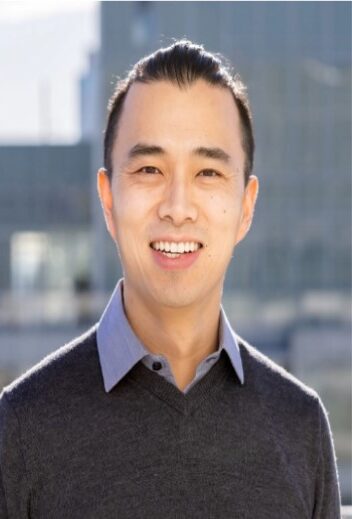
Photo: Boundless Immigration.
Xiao Wang is the CEO and Co-Founder of Boundless Immigration, which focuses on simplifying the immigration process. “This debate is typically heard in Constitutional terms, but that conversation misses the side of the debate that will have long-term impact – hospital staffing, research staffing. And it challenges how people view living a life in the US. If you are a highly skilled worker and you are deciding where to build your future – a stable life – this ban will cause people to question if America is what’s best for their family. In rural communities, American Medical Colleges says the US faces a physician shortage of 86,000 doctors by 2036. If even a modest amount of these workers decide that America has become too unstable of a place to raise their family. The hardest hit places will be in rural areas that are already struggling to recruit workers.”
Please use this link to view the entire briefing on this important subject – https://americancommunitymedia.org/media-briefings/unforeseen-consequences-of-a-ban-on-birthright-citizenship. Also, the following links are to research papers done by Dr. Connor and his team, and by Dr. Gelatt and her team, respectively.
https://journals.sagepub.com/doi/10.1177/23315024261434042
https://www.migrationpolicy.org/news/birthright-citizenship-repeal-projections.
Be the first to comment