By Christopher Young,
Contributing Writer,
Leading up to the capstone event of the 61st Bridge Crossing Jubilee weekend, there had been four days packed with solemn remembrances, prayer, education, training, singing, mock-trials, roundtables, and various-themed summits. The full schedule can be viewed at https://www.selmajubilee.com. There had also been two incidents of shootings downtown, on Friday and Saturday evenings, that left six people injured. No suspects have been identified and no motive determined, as Selma Police continue to investigate, according to WSFA Chanel 12.
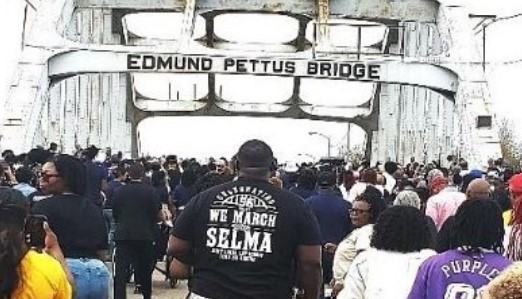
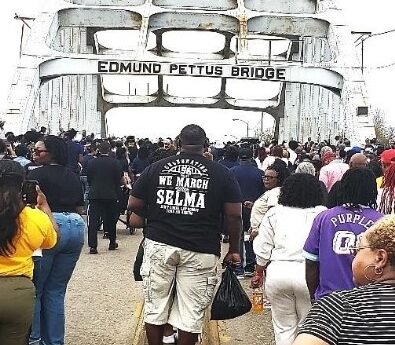
Severe storms had threatened Selma at the start of the long weekend, but sunshine broke through the overcast skies as the customary speeches began at the foot of the Edmund Pettus Bridge shortly after Noon on Sunday. Lifelong activist and Global Digital Transformation Director for the National Newspaper Publishers Association (NNPA), commonly known as The Black Press, Reverend Mark A. Thompson served as emcee this year. With each year there are losses, and this anniversary did not include lifelong Civil Rights activist and Selma native Joanne Blackmon Bland, Civil Rights Movement leader Bernard Lafayette who passed just three days earlier, Civil Rights pioneer Claudette Colvin – who nine months prior to the more publicized Rosa Parks incident – refused to give up her seat on a Montgomery bus, and the world-renown Reverend Jesse Louis Jackson, Sr.
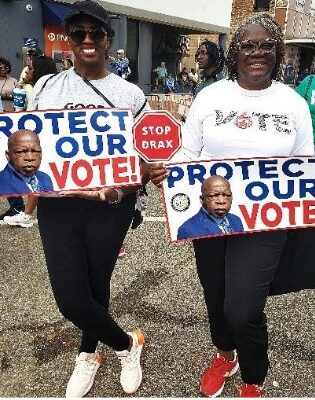
The unmistakable theme created by this year’s speakers was courage rising above fear. The list includes Reverend Al Sharpton; Martin Luther King III; Yusef D. Jackson, who now leads the Rainbow PUSH Coalition and had buried his father the day before; DeMark Liggins, President/CEO of the Southern Christian Leadership Conference (SCLC); South Carolina’s 6th District Congressman James Clyburn; Alabama’s 7th District Congresswoman Terri Sewell; New York’s 9th District Congresswoman Yvette Clarke; Melanie Campbell, President/CEO and Convener of Black Women’s Roundtable; Illinois Governor J.B. Pritzker; Executive Director of the Selma Center for Nonviolence, Truth, and Reconciliation Anika Jackson; Minnesota Attorney General Keith Ellison; Illinois Attorney General Kwame Raoul; New York Attorney General Letitia James; Washington State Attorney General Nick Brown; Black Voters Matter founder LaTosha Brown; Narional Farm Workers Association founder Delores Huerta; Former Assistant Attorney General for Civil Rights Kristen Clarke; and Former Transportation Secretary Pete Buttigieg.
Selma Mayor Johnny “Skip” Moss, III, welcomed the masses to Selma, shared a message of truly changing the culture in Selma, and read parts of a Proclamation to Reverend Jesse Louis Jackson, Sr. and designating March 8, 2026, as “Jesse Jackson Day in Selma.”
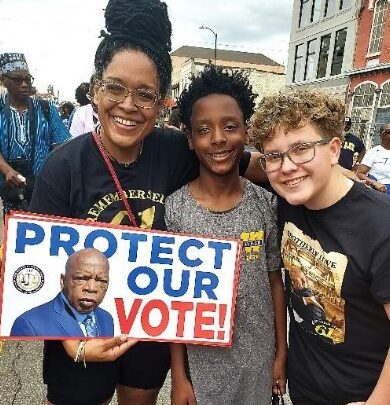
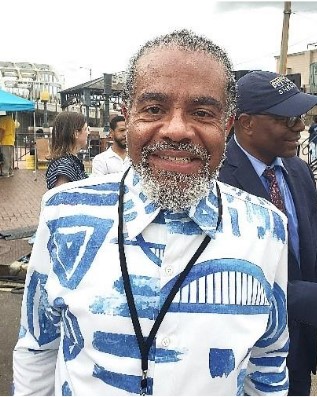
Various sources claim no one was beaten to death by Alabama State Troopers on the Edmund Pettus Bridge on March 7, 1965. Who says that? Jimmie Lee Jackson was shot twice by an Alabama State Trooper on February 18, 1965, and died as a result eight days later. His death further fueled the Selma to Montgomery March – a march by hundreds of African Americans peacefully protesting their lack of voting rights. Reverend James Reeb, white as snow, was badly beaten on March 9th and died as a result on March 11th. At least 17 marchers were hospitalized due to beatings and teargassing on the bridge. Viola Luizzo was shot dead by Klansmen while ferrying other activists between Selma and Montgomery. Five months later, a white Episcopal seminarian Jonathan Daniels was shot to death by a highway worker and part-time deputy sheriff while shielding seventeen-year-old Ruby Sales from a racist attack. Saying that no one was beaten to death on the Edmund Pettus Bridge on March 7, 1965, doesn’t remotely capture that truth of that day, but fortunately ABC, CBS, and WVTM 13 television cameras did capture the truth, and it was broadcast around the world, leading to the Voting Rights Act (VRA) of 1965.
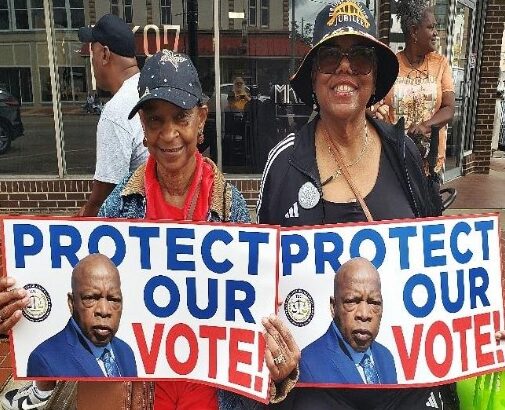
The VRA is considered the most successful Civil Rights legislation in our history, yet in 2013’s Shelby v. Holder case before the Supreme Court, Section 5 – requiring preclearance by bad-actor states – was revoked. Lawsuits have been flying ever since. Then in 2021, the High Court ruled on Brnovich v. Democratic National Committee, making it harder to bring related lawsuits. A Freedom to Vote Act, paired with making the John Lewis Voting Rights Advancement Act law, would restore what the Court has gutted, but it has not happened. Currently, the Supreme Court is considering a case – Louisiana v. Callais, which could further weaken voting rights by limiting the use of race in redistricting. A decision is expected in June of this year.
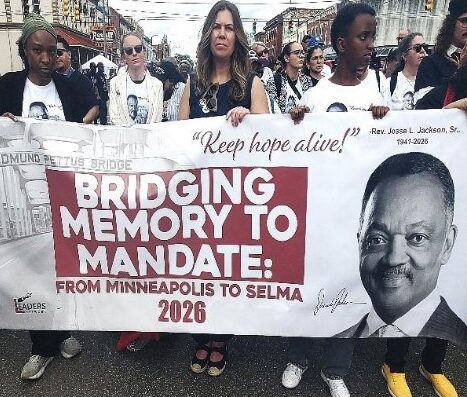
At the risk of grossly stating the obvious, these ongoing affronts are always planned, engineered, and codified by white people. They are always at the expense of African Americans. Even today, the Safeguard American Voter Eligibility (SAVE) Act, which was narrowly passed in the House last month, is awaiting a vote in the Senate. The Brennan Center for Justice says the Act will prevent millions of Americans from voting. On March 9, 2026, Trump told a GOP audience in Doral, Florida, that “it will guarantee the midterms.” He further stated, “I won’t sign any other legislation until the SAVE Act passes,” per www.thehill.com. Fairness and equity are not in his playbook. That’s why Selma Alabama is so important. That’s why people come back year after year. That’s why righteous Americans travel from every state in the nation to Selma every year. That’s why everyone needs to vote.
On a hopeful note, at the top of the bridge, I had the pleasure of meeting Reverend and Mrs. William Barlow from Reidsville, North Carolina’s Building Lives Christian Church. They were dressed like it was Sunday service. They are African American. Their 70’s are behind them. They have seen and lived the discrimination. After introductions the Reverend said, “I come every year.” So, I said, have you noticed a significantly higher percentage of white people here this year? He smiled brightly, saying, “That’s a good thing.” When I elicited more, he simply said, “God is moving.”
Be the first to comment