
By Janice K. Neal-Vincent, Ph.D.,
Contributing Writer,
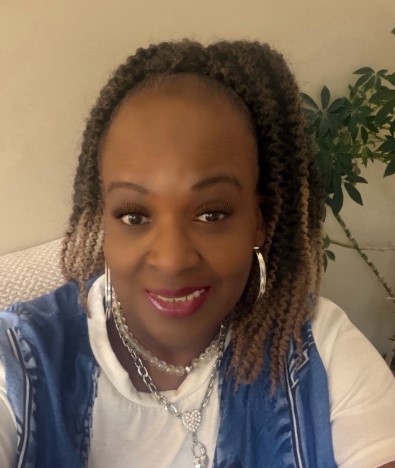
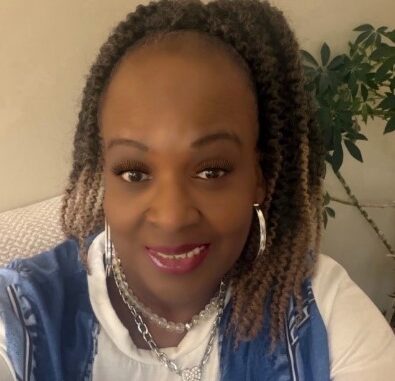
September 2021 was the beginning of health unrest for Tina Leavy. That was a time period that she could never forget. She learned during that time that she was in a new world. Her new discovery frightened her. To her, there was no way to be relieved from the fear that kept her on edge. She was trapped. She had been diagnosed with stage 2 breast cancer.
Tina learned that undergoing the treatment process was a significant challenge. It was something new on her plate, and she had to learn how to cope in her “new life.” She had to yield to her doctor’s advice by “doing everything” she was advised to do. Taking radiation daily for 36 weeks and taking chemo pills were burdensome. “I had significant pain and had to deal with it because the doctor could not administer pain medication,” she recalled. Additionally, there were periods of uncertainty, not knowing what was next. Despite hurdles, she had to learn how to fight negativity – which only dragged her down – by “remaining positive.”
The breast cancer survivor was so keyed up that she was unable to sleep at night. Tossing and turning made her restless. She was tired the next day after the night’s long ordeal. As a result, her doctor prescribed sleep medication. It was helpful in that it brought on relaxation, and “such calm” allowed her nerves to rest.
Beyond tapering down to sleep, Tina knew that she had to do something else. A step in the right direction of coping was reaching out to her family and friends who prayed daily for her. Her oldest sister Linda Smith stayed by her side from day one. “She went to every appointment and made sure I was okay. My boys and my other sisters showed much love and support by making sure I was following the doctor’s orders,” she confided.
What has happened to Tina since her breast cancer diagnosis? Her breast cancer saga has given her a positive outlook on life. “God graced me a chance to live; therefore, I enjoy the little things I used to take for granted. Whenever I can, I encourage others to get and keep their annual mammograms,” she said.
Signs of that encouragement are visible. Tina says her family and friends have looked at themselves in another light, the light of self-awareness. From that light, they understand the essentiality of taking care of themselves by being attentive to their health. Thus, they now do self-examinations and annual checkups.
In that regard, the interviewee asserted that others could help raise awareness “by sharing their stories and encouraging annual checkups.” From these stories, others can be uplifted. From these stories, support systems can be developed.
When asked what her new priorities are, breast cancer survivor Leavy listed loving on family, staying positive, and continuing to trust God. These tools are the mechanisms for enabling her to function properly while being mindful that hers is not a walk alone. From these tools, there is resilience.
Irrespective of Leavy’s story, anyone, despite gender, race, or ethnicity can get breast cancer. Age plays an essential part in getting the disease, but after age fifty, the stakes can be higher. Learning the signs of breast cancer, such as body changes, is highly recommended.
Be the first to comment