

By Ayesha K. Mustafaa,
Contributing Writer,
The American Community Media briefing Friday, April 17, 2026, continued in giving insight on the US/Iran War.
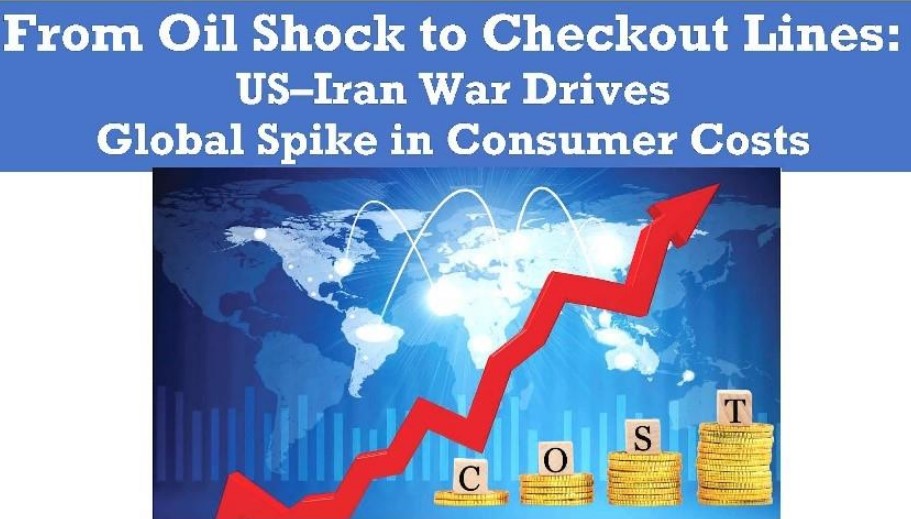
The speakers of the one-hour briefing clarified the premise that this war has triggered a major economic shock affecting Americans – oil prices surging, consumer goods disruptions, and higher costs for fuel, transportation, food and everyday goods.
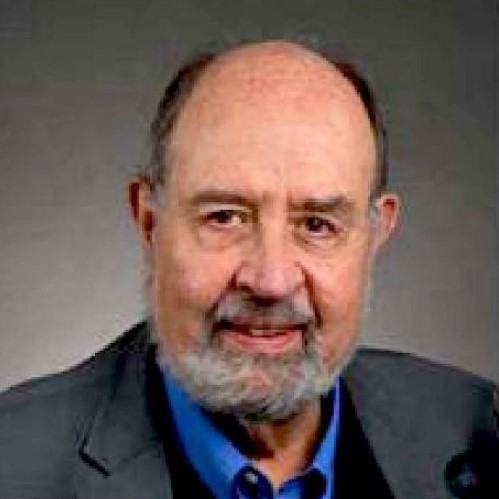
The invited presenters were Dr. William Orman Beeman, Professor Emeritus of Anthropology at the University of Minnesota – a specialist on the Middle East; Dr. Anil Deolalikar, Professor of Economics at UC Riverside and founding dean of School of Public Policy at UCR; and Dr. Ryan Nunn – Director of Research for the Budget Lab at Yale.
Questions presented from the attending press organizations ranged from the Secretary of Defense (War) Hegseth’s invoking Biblical terminology with war, as well as President Trump’s “explicitly warning of ‘a whole civilization will die’” in relation to the Iranian’s not yielding to U.S./Israeli terms.
Dr. Beeman overwhelmingly led the discussion. As it was noted that Spain’s Prime Minister Pedro Sanchez “has led the opposition to the war in Europe and attempts to prevent further escalation of the conflict,” to this reference, Mr. Beeman responded: “Unfortunately, Spain’s opposition to [the war] is not likely to deter the U.S.; Spain denied its military support for the attack but has little leverage over the war; it has been more symbolic.”
Also addressed was a question about the Iran people themselves, “who rebelled against the government, against the principles of the revolution (1974) … under the current repressive (Iranian) regime” – still left to be determined as the call from President Trump to end Iranian civilization sent a chill down the backs of all Iranians.
Further questioned was the ability of “U.S. policymakers to make decisions without a deep understanding of Iran’s intention and worldview.” And were the U.S. military actions in Iran economically justified for the U.S., given “the nuclear threat was not proved by any government body.”
Not only its impact of the U.S., but in the region, the impact of the war thus far has brought on humanitarian crisis from Iran’s strike on area countries’ desalination plants – the source of 99 percent of drinking water in Kuwait and Qatar.
Further noted is the potential for the “War on Iran” to “tip the global economy into a recession.”
Another aspect of current attacks by the Trump Administration on other countries raised the issue of the U.S., “now an exporter of oil,” as Trump has proclaimed, why would the U.S.A. need to “exploit/export Venezuela’s oil”? Also noted that Trump had proclaimed the successes of the U.S. in exporting oil and having sufficient oil reserves for its own use.
Along with economic implications from the “US-Israeli War on Iran,” questions raised are about the U.S.A. national elections in play – how will the war impact voters, when local polls show that “most Americans do not support the war”? During Trump’s presidential campaigns, one of his strong platform topics was to keep the U.S.A. out of “forever war” abroad.
In summation, Prof Beeman said, “The U.S. actions in Iran are absolutely detrimental to the economy of the U.S., is costing billion dollars a day and does not make the world safer – since the U.S. is insisting that Iran stop doing something that it is not doing – developing nuclear weapons.”
Turning to the question of the apparent spat between Trump and Pope Leo, Beeman noted that the Pope was “pushing back against what he surely sees as blasphemous use of Christian symbolism in the service of war, destruction and violent action.”
He added that the Pope replied that he “is not afraid of Trump or Hegseth” regarding any attacks against him. Also, that there is the disapproval by Christians, especially Catholics when “fake biblical quotes” are used to justify war.
From the attending journalists, it is surmised in conclusion that Americans are concerned about American issues that impact American families.
However, a question that no one ever seems to be ready to tackle is: Why is North Korea allowed to have nuclear advanced weapons, and no nation ever makes any demands on North Korea to turn over their weapons are “bombed back into the Dark Ages”?
Still no answer!
Revisiting the concern that this war premise did not start in March 2026 but going back to the USA-CIA led “coup of a duly elected President of Iran” in 1953. To this premise, Beeman responded, “The 1953 coup that re-installed the Shah of Iran (deposing its president) is the most important event in the Iranian view of the U.S.-Iranian relations.
“It stands as a monument to the U.S. neocolonialism and is emblematic of U.S. interference in Iranian affairs. It forms a symbolic framework for everything that has proceeded from that period down to the present,” Beeman said.
A unique assessment of the 1953 coup led by the US upon Iran against its President Mohammad Mosaddegh has recently been published by Dayvon Love, Director of Public Policy of “A Beautiful Struggle” and published in the San Diego Voice and Viewpoint (and reprinted in other specialty media).
Love relates, “Mosaddegh’s policy of nationalizing the oil wealth of the country was disruptive to Western oil companies that wanted unfettered access to Iran’s oil reserves. After the overthrow of Mosaddegh, the United States installed the Shah of Iran to lead the country, which was a brutal, autocratic regime that lasted for a couple of decades.
“The 1979 revolution in Iran that resulted in the overthrow of the Shah and the taking of American hostages is often narrated as an act of anti-American aggression instead of a response to the U.S. imposition of a brutal regime on the people of Iran.
“In other words, the 1979 Iranian revolution and the anti-American sentiments expressed over the years by Iranian leadership are a response to U.S. imperialist aggression toward the sovereignty of the Iranian people and the larger Muslim world.”
Something to think about as the U.S.-Israeli War on Iran plays out on the world scene.
Be the first to comment