
By Janice K. Neal-Vincent, Ph.D.,
Contributing Writer,
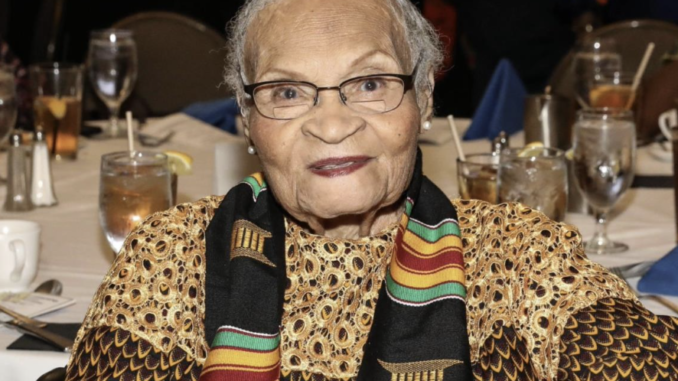
God’s wheel of time has closed the eyes of the oldest 1921 Tulsa Race Massacre survivor, Viola Ford Fletcher. She was born on May 10, 1914 and died on November 24, 2025 at age 111. Her lived experiences not only linger, but speak to contemporary inequalities that are offspring of racial violence and economic theft.
Greater than a century ago, young Viola – the second oldest of eight children – and her family left behind sharecropping fields in Comanche, Oklahoma for a better life in Greenwood, Oklahoma – an all-Black district that flourished as the most prosperous Black community in the U.S. This national symbol of economic worthiness was composed of 35 blocks of thriving hotels, theaters, groceries, law firms, doctors’ offices, restaurants, and churches. Viola saw this thriving district as a safety net, filled with friendly neighbors and beautiful homes.
Then tragedy struck this prominent “Black Wall Street” for more than 18 hours from May 31 to June 1, 1921. A white mob attack created trauma that festered throughout Fletcher’s entire life. The U.S. Department of Justice reported this year that this “military-style attack” was orchestrated by white civilians, many of whom were armed local officials. According to Kolumn Magazine, “looting, burning, and killing included planes flying overhead and dropping explosives or incendiaries on Black homes and businesses.”
During her later years, Viola (widely known as “Mother Fletcher),” spoke publicly about the Tulsa Race Massacre. When she was 107-years-old, she testified before Congress in 2021. She recalled that she was only seven when the horrific incident occurred, and she referenced it as “a battlefield.” Her family’s home was filled with gunshots, the smell of smoke, and flaming windows.
The reign of terror spawned families running amidst gunshots and violence inflicted upon them. What once was prominent turned to ruin. Kolumn Magazine reported that at least “300 Black residents were dead; more than 1,000 homes and businesses were destroyed; and 10,000 people were suddenly homeless.” “The scenes still played ‘like a movie in my mind,’” as she tried to sleep, Fletcher claimed.
For years, families struggled to rebuild their shattered lives and to regroup. Fletcher, a dislocated child, was displaced and impoverished. Then after the fourth grade, she left school. She married Robert Fletcher at age 18. The couple worked in shipyards supportive of World War II, and she was an assistant welder, labeled “a man’s job,” in an age of segregation and discrimination.
“No one cared about us for almost 100 years,” the informant told Congress, while appealing for support of reparations for Blacks harmed by the Tulsa Race Massacre. Lawmakers expressed both empathy and sympathy via a standing ovation, but recognition without restitution was the result of courtroom setbacks for Fletcher and other plaintiffs. These setbacks, however, did not deter Fletcher from telling the 1921 Tulsa, Oklahoma story.
In 2023, the author was 109 when she published her memoir, “Don’t Let Them Bury My Story: The Oldest Living Survivor of the Tulsa Race Massacre in Her Own Words.” This book, released by Mocha Media Publishing, is co-authored with Ike Howard, Fletcher’s grandson. Nestled within the scope of American society, the chronicle reveals Black migration; prosperity depicting life in its finest with love of family, children at play, Sunday church services; the downtrodden path of Greenwood; the Jim Crow South; World War II; and the civil rights struggles that compelled Congress to reshape U.S. laws.
Before she closed her eyes, Viola Ford Fletcher – a Black woman – was honored in Ghana through ceremonies that linked her to the African diaspora. Crowned “a queen mother,” she was held in high esteem as a strong woman with new names: Naa Lamiley and Naa Yaoteley. This firster underwent dehumanization in Tulsa, Oklahoma as a child but stood on the Ghanaian soil at the request of where her ancestors were enslaved and shipped to America. National and international media covered Viola Ford Fletcher’s story of Black pride, resistance, and resilience.
Be the first to comment