
By Janice K. Neal-Vincent, Ph.D.,
Contributing Writer,
Following World War I, a resurgence of white supremacists flooded the country, giving rise to numerous lynchings and other acts of racially motivated violence. The Tulsa Race Massacre has been recorded in American history as one of the most destructive acts of violence. Tulsa, Oklahoma became a hot spot of violence when news circulated that the South Main Street Drexel Building’s young white elevator operator Sarah Page screamed of sexual assault as Dick Rowland – a Black teen – entered the elevator on May 30, 1921. Then Rowland fled the scene. The incident led to his arrest on May 31st.
Rowland’s arrest and Black wealth induced The Tulsa Race Massacre which lasted beyond 18 hours (May 31st to June 1st). Thousands of white Tulsans instituted a false narrative that numerous Black Tulsans, aided by Blacks from nearby towns and cities were having a “large-scale insurrection.” Hysteria spread. An angry white mob stood outside the courthouse and demanded that Sheriff Willard McCullom release Rowland to them. Instead, McCullom barricaded the top floor to protect the teen.
Foundational scholar and civil rights activist W.E.B. Du Bois coined “the psychological wages of whiteness” in his 1935 magnum opus, Black Reconstruction in America when he referenced Black prosperity as a threat, a provocation and a collective narcissistic injury. More than a century has passed in this post-civil rights era and the Age of Trump, but Du Bois’s phrase hangs as an indisputable truth. According to media reports, at least 300 Blacks were killed during the massacre in the prosperous neighborhood of Greenwood, Oklahoma, referenced as “The Black Wall Street.” Machine guns, loads of kerosene, and bombs dropping from airplanes were among weapons that were used. More than 1,200 homes and at least 60 businesses were destroyed. Furthermore, generational wealth was emptied. Total damages in today’s money were approximately $200 million.
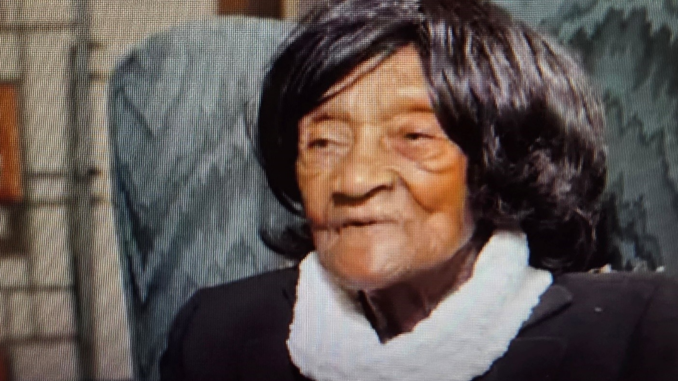
Like her predecessors and heirs, last known survivor Mother Lessie Benningfield Randle (111) has not received full restitution. She and her family have experienced financial, emotional, and social hardships due to the massacre and public nuisance. The fight for justice, however, continues as lawyers persist in keeping her case alive.
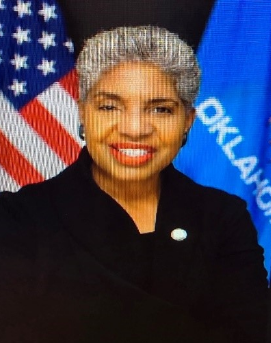
Oklahoma State Senator Regina Goodwin represents the Greenwood District. Her great-grandparents – James Henri and Carlie Marie Goodwin – migrated from Mississippi to Tulsa in 1913 while seeking to rid their four children from the atrocity of the Jim Crow South. James owned a grocery store, a funeral home, and a real estate office. His businesses were destroyed during the massacre, and he fought significantly for restitution for his livelihood and that of his neighbors on Black Wall Street.
Senator Goodwin continues that legacy. She insists that reparations for the descendants of survivors of the massacre are in keeping with everything that they lost. To her, it is worth the effort to continue the struggle.
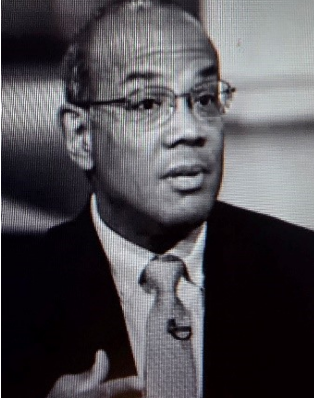
John W. Rogers Jr. CEO of Ariel Capital Management is the descendant of J.B. Stradford, considered the wealthiest Black man in Tulsa in 1921. Not only did he own the Stradford Hotel on Black Wall Street, but he was an outspoken critic of the Jim Crow South and racism toward the Black race. White supremacists burned down the Stradford Hotel on the night of the massacre and reported to authorities that Stradford incited the riot, thereby forcing him to flee to Chicago, but he never achieved the same financial success there.
Rogers often thinks about the Tulsa tragedy. Like his great-grandfather was, he is outspoken when it comes to racism. He said to The Mirror US, “Sometimes, your comments aren’t welcome,” but they are necessary. Accordingly, Rogers demands reparations for the Tulsa victims’ descendants. Further, he charges Americans to fight for their own freedom. If they do not fight, “a similar attack on another thriving Black community could occur…Things can shift. We cannot accept the changes that are happening in our society.”
Malee Craft, the daughter of Tulsa Race Massacre survivor Hughes Van Ellis, was shielded from the tragedy until 1921. Her father and his siblings fled Tulsa after Black Wall Street was destroyed. Craft shared that what was utmost important for the descendants as growing children was the unification that existed within the community. Unification from the massacre is the trademark that she teaches about to Black school children in different schools.
Have things changed in Greenwood today? Goodwin elaborates, “The flames; the fire; the death. That trauma still exists today. Even when you go through Greenwood today. There have been no charges, no convictions and [no consequences] for the crimes. You really feel it if you’re tied to this community.”
Be the first to comment