
By Christopher Young,
Contributing Writer,
As immigration enforcement actions intensify across the country in our communities, the Trump Administration pushes to rewrite or erase the nation’s nonwhite history – censoring national museum exhibits, removing plaques from public parks, scrubbing national holidays – we hear from speakers about the push to reclaim community narratives against formidable odds.
Sandy Close, the founder and Executive Director of American Community Media, the first and largest association of ethnic news outlets nationwide. Ms. Close will step down after three decades on February 1, 2026, and announced the appointment of Jaya Padmanabhan to succeed her. Ms. Close served as moderator for this national briefing held on January 30, 2026. She facilitated discussion with four panelists and 75 media outlets from around the globe.
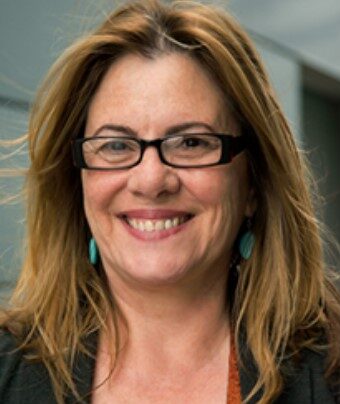
She began with Ann Burroughs, President and CEO of the Japanese American National Museum (JANM)and Chairwoman the International Board of Amnesty International, asking who gets to decide what this country remembers and who gets to decide what we forget. “First let me say, the ethnic media has really been at the forefront of documenting community stories that might otherwise, be ignored, distorted, or just simply erased…you have also been so unbelievably instrumental in ensuring that communities see themselves reflected with dignity and with accuracy, and we know that that is something that the mainstream media has absolutely failed to do.”
Burroughs continued, “So, this year, of course, it becomes especially urgent, because the Trump administration has made concerted efforts to present a very narrowed, sanitized version of American history that is tied to the 250th anniversary, one that minimizes conflict, that attempts to erase history, homogenized culture, erase diversity, one that entirely avoids accountability, and always seems to be framing the past through a single ideological lens. And of course, we know that that is not American history…we always know that authoritarian regimes, whether here in the US or whether the world over, that they consistently attack culture and history first. They attack memory to create a climate of deliberate destabilization.”
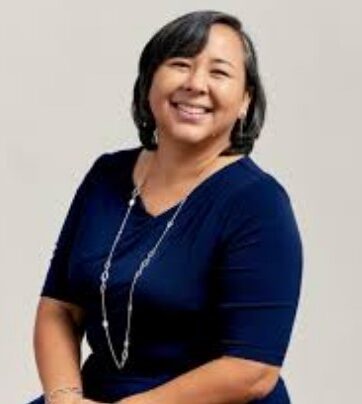
Photo: nwlc.org.
Margaret Huang, Senior Fellow for The Leadership Conference on Civil Rights and Human Rights, former President and CEO of Southern Poverty Law Center, shared next. “We really need to think about challenging the community narratives, the official narratives that are coming out of this administration. Many of you will know the history of the Confederate loss in the South. But depending on where you grew up, you might know a different version. Where I grew up, in East Tennessee, we never talked about the Reconstruction era. We never talked about the incarceration of Japanese Americans. We never learned about the Civil Rights Movement. My American History class focused on the number of people killed in various battles over the course of U.S. history and that was about it…I first learned about Japanese American internment at the Smithsonian Museum for American history. Wat else didn’t I know. That led to a lifetime of commitment to challenging false narratives…the Southern Poverty Law Center has tracked Confederate memorials around the country for many years now. And in fact, we put out our first report, I think in 2018, and we learned that there are Confederate memorials in nearly every state in the country, which is surprising, because the Confederate War was not fought outside of the South, and you know, the East Coast states. All of this is a reflection of what was documented. None of these memorials were put into place right after the war. These memorials were put in place 60-80 years later when white supremacy was at the forefront, particularly in fighting back against the civil rights movement.”
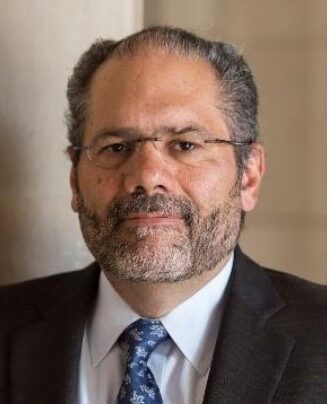
Photo: thewilsoncenter.org.
Ray Suarez, Journalist and Author of “We Are Home: Becoming American in the 21st Century,” was the next panelist. “It’s almost in the sense of the last kick of a dying mule, giving white grievance a chance to be aired, a chance to be heard, a chance to use demographic muscle to impose a fantasy narrative on the United States as it considers its 250 years of existence…recently the history of slavery, at a presidential site, of a president who owned slaves was removed by National Park Service employees, because Donald Trump believes that too much of the national retelling of our history involves, in his words, that slavery was bad. This idea that it makes white people feel bad, or it makes white children feel guilty – it’s all baloney. This is all a power play to reassert the center spotlight on the stage of American history of just one kind of people. The idea of whiteness, which is a contrived, engineered, historical idea is becoming so powerfully asserted in the discourse now…legacy Americans is a term that people like Tucker Carlson and Nick Fuentes are now using.
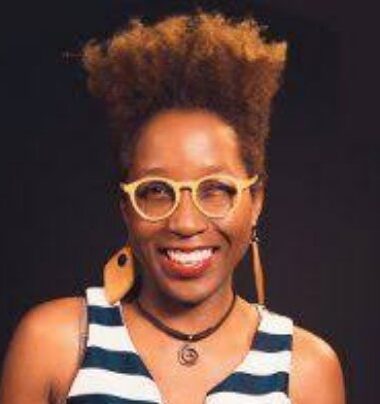
Photo: Troy University
Anneshia Hardy, Executive Director at Alabama Values, a cultural narrative strategist, shared, “I do want to add that honest history isn’t about assigning individual guilt, it’s about collective responsibility and clarity. The problem is that we often confuse accountability with accusation… at Alabama Values, you know, we are approaching the commemoration of America’s 250th with a clear understanding that people are not just struggling with facts. They are struggling with meaning. We see communities grappling with overlapping political realities, escalating anti-immigrant attacks, the normalization of white nationalism, white nationalist rhetoric, persistence of anti-Blackness, the censorship of history and education, state violence, both visible and quietly bureaucratic. And so, in moments like this, simply providing information is not enough, so our work is rooted in meaning-making, which really helps communities connect the past to the present. It helps communities understand how power is operating now. The whitewashing of history is not a passive act, that it is an active political strategy, one that serves white supremacy by narrowing who is seen as fully American, and who’s suffering and resistance and humanity, you know, can be safely ignored.” Ms. Hardy’s final thought was, “our country can’t turn the corner on its own. It will only move when enough people decide that maintaining humanity is worth more than maintaining power.”
Be the first to comment