
By Christopher Young,
Contributing Writer,

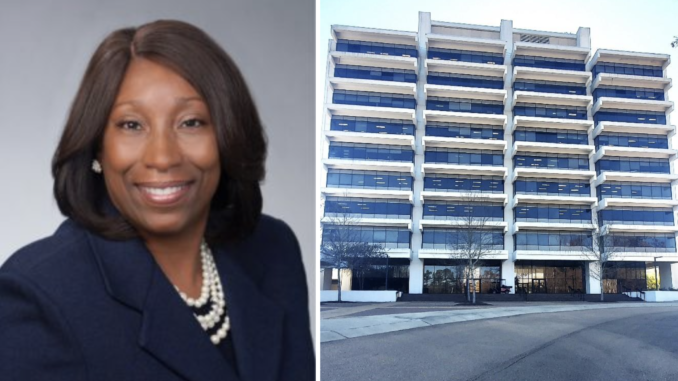
Photo: www.jsums.edu.
After nine years in various positions within Jackson Public Schools, including Principal at Forest Hill High School, Debra Mays Jackson became Vice President of Hinds Community College. After four years at Hinds, she became Vice President and Chief of Staff at Jackson State University – Thee I Love, in July 2017. In addition to both bachelor’s and master’s degrees, she earned a Specialist degree in Educational Administration and Supervision from Jackson State University, then went on to complete her Doctorate in Educational Administration and Supervision at Mississippi State University.
For Dr. Mays Jackson to be in the running to become the next President of Jackson State when Dr. William Bynum abruptly stepped down in 2020, was a given. In addition to possessing strong academic credentials, her portfolio included significant experience in higher education administration. Instead, she was never given the opportunity. Mississippi’s Institutions of Higher Learning (IHL) Board appointed Attorney Thomas Hudson and never conducted a national search for the best candidate to serve as the next President of the largest Historically Black College and University (HBCU) in Mississippi. IHL Board members just took a vote, and Hudson, who had previously been Bynum’s “special assistant,” became President.
Mays Jackson filed an Equal Employment Opportunity Commission (EEOC) complaint alleging discrimination against her on account of her sex, when IHL Board members voted to hire Hudson without allowing candidates clearly more qualified to apply for the position. Hudson didn’t last long. He was placed on administrative leave with pay in early May 2023 and Dr. Elayne Hayes Anthony agreed to serve as Acting President while a formal search for a permanent President played out. Anthony did apply for the position and was interviewed – yet despite a year at the helm, was not selected. Mays Jackson applied during this period but was not granted an interview for the position. Ultimately, the search committee selected their own insider, Dr. Marcus L Thompson, who was serving as Deputy Commissioner of the IHL, despite his never applying for the position. Thompson resigned in May 2025 – mums the word, of course, on why. Dr. Denise Jones Gregory currently serves as Interim President.
Wednesday, December 10, 2025, a three-judge panel of the U.S. Court of Appeals for the Fifth Circuit denied the defendants’ (IHL Board members) motion to dismiss on the grounds of qualified immunity. The decision of the appeals court is final, yet it pertains only to the qualified immunity attempt. The U.S. District Court for the Southern District of Mississippi, for the case styled as USDC No. 3:23-CV-3095, had previously denied the same motion by the defendants’, but they sought review by appeal. The U.S. District Court had also previously denied the defendants’ motion to dismiss the violation of Title VII of the Civil Rights Act of 1964 – the federal law that prohibits employment discrimination based on race, color, religion, sex, and national origin.
It’s noteworthy that the IHL, often accused of not being transparent, doesn’t tend to take ownership of their actions. They seem to behave as if they truly do reside in an ‘ivory tower,’ and have been sued many times, usually for wrongful termination, and even when found guilty, they fight vigorously against the punishment or accountability, so to speak.
Defining qualified immunity, Cornell Law School says, “qualified immunity is a type of legal immunity that protects a government official from lawsuits alleging that the official violated a plaintiff’s rights, only allowing suits where officials violated a “clearly established” statutory or constitutional right.”
Interestingly, qualified immunity goes back to the 1967 landmark U.S. Supreme Court case, Peirson v. Ray, following the arrest of clergy protesting at the bus terminal in Jackson, Mississippi, in 1961. Were the police officers who arrested the clergy acting in good faith and with probable cause, even if it was later determined their actions were unconstitutional, ended up being the critical question for the High Court. And poof, qualified immunity was born. The Fifth Circuit Court of Appeals panel ruled that qualified immunity did not apply in the Mays Jackson case. That ruling is rare. An Institute for Justice study in 2024 found that the Fifth Circuit only denied 16 percent of qualified immunity appeals, making it the most likely Circuit to grant it.
The IHL Board of Trustees members named in the lawsuit are Tom Duff, Steven Cunningham, Bruce Martin, Chip Morgan, Gee Ogletree, Hal Parker, J. Walter Star, and Jeanne Carter Luckey – who died November 7, 2024. Learn more about the IHL Board of Trustees here, https://www.mississippi.edu/about/board-trustees.
The IHL hires of the last four permanent Presidents of Jackson State University, dating back to 2011, have brought various elements of confusion, discredit, and/or instability to the revered institution. As Dr. Mays Jackson, represented by esteemed attorney Lisa M. Ross, returns to the U.S. District Court to continue her individual fight for justice, let’s all hope that somehow, someway, this deeply troubling and potentially unlawful pattern of hiring can cease.
Be the first to comment