
By Edelia “Dr. Jay” Carthan,
Contributing Writer,
In the face of one of the nation’s most urgent water emergencies, a group of women stepped forward when systems failed and leadership faltered. During the height of the Jackson water crisis, community advocates and legal intervenors became the backbone of a movement demanding safe, reliable drinking water as a fundamental human right.
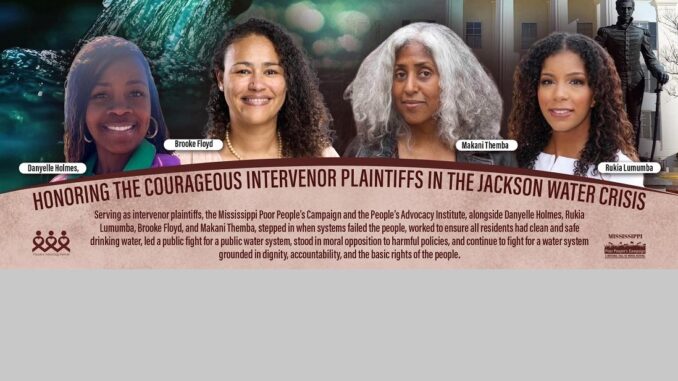
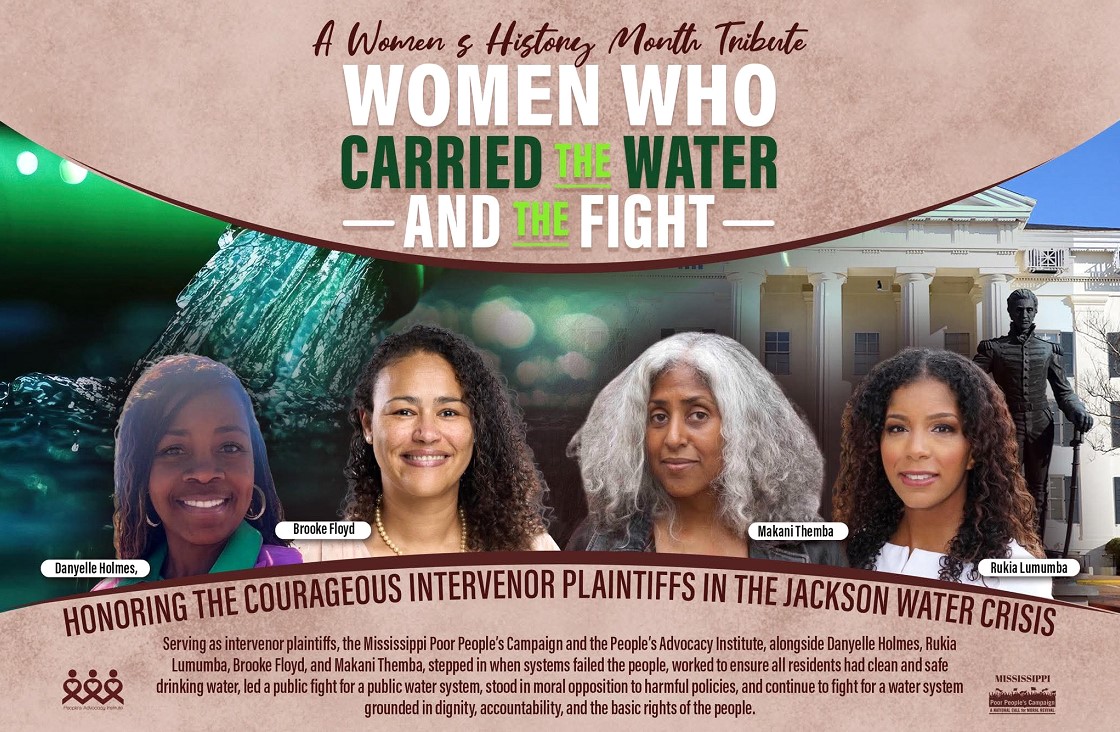
Among them, Danyelle Holmes and Rukia Lumumba stood alongside Brooke Floyd and Makani Themba, helping to lead a sustained push for accountability, transparency, and long-term solutions. Working with the Mississippi Poor People’s Campaign and the People’s Advocacy Institute, these women helped elevate the voices of residents who had long been unheard.
Their work as intervenor plaintiffs was not simply legal, it was deeply rooted in community trust. They organized, educated, and mobilized residents while pressing for systemic change in how water infrastructure is governed and maintained.
Danyelle Holmes stated Monday, March 30… “At 11:23 this morning, the Mississippi House voted 78 to 40 to take control of Jackson’s water away from its people. No rate study. No feasibility study. No community input. Nothing. Just a vote. Just like that.
Holmes went on to say, “Let me be clear about what water means in this city. Water is not just life. Water is health. Water is economic dignity. Water is political power. And when you strip a majority-Black city of control over its own water without a single study to justify it, you are not solving a crisis. You are transferring power from the people to the market. From residents to contractors. From democracy to profit.
Detroit lost control of its water, and 141,000 Black households were cut off. Flint trusted the process and got lead in its pipes. Chester, Pennsylvania had a water authority generating $51 million a year and went bankrupt anyway because not one dollar went back to the people. That is the blueprint they just voted to bring to Jackson. Forty representatives said no. Their names are on that roll call and so is their courage. The other seventy-eight, their names are on there too. And the people of Jackson will not forget.
The Prophet Amos said let justice roll down like waters. Not trickle. Not seep. Roll. That is our standard. That is our demand. And we will not stop until Jackson’s water is governed by Jackson’s people. “Water is life. Water is power. Water is a human right. And today they took ours. We intend to take it back,” said Holmes.
Holmes’ remarks underscored the urgency and historical weight of the moment, framing the decision as part of a broader pattern of disinvestment and loss of local control in Black communities.
“For Jackson residents, water as a human right means much more than turning on the faucet, it means being able to trust that what comes out is safe, affordable, and consistent. It means not having to choose between paying a water bill and buying groceries and not living in fear that the system will fail again,” said Rukia Lumumba of the People’s Advocacy Institute.
Lumumba framed the crisis not just as an infrastructure issue, but as a matter of dignity, equity, and justice, one that continues to shape the daily lives of Jackson residents.
Together, these leaders challenged harmful policies and pushed for a public water system grounded in accountability and the basic rights of the people. Their advocacy continues to shape the ongoing conversation about infrastructure, equity, and the role of community leadership in crisis response.
As we reflect during Women’s History Month, their efforts serve as a reminder: real change is often carried forward not by institutions, but by individuals willing to stand in the gap and fight.
Be the first to comment